
CTWANT
By Li-yan Xu, 26 Aug. 2026 14:14PM徐立諺 2026-08-26 14:14
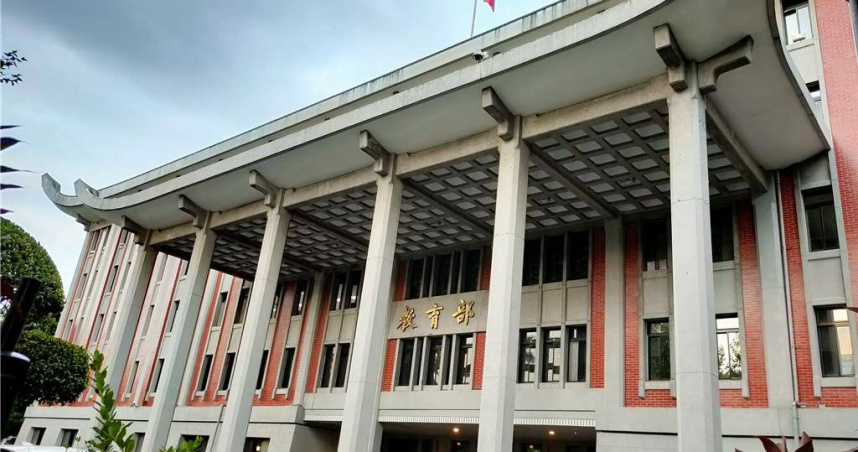
The Ministry of Education issued the "Reference Manual for Establishing Gender-Friendly Dormitories in Higher Education Institutions" to assist colleges and universities in creating diverse, inclusive, and friendly residential environments. (Photo / UDN Data Photo / File Photo)


To continuously promote gender-friendly campus environments and assist colleges and universities in properly planning gender-friendly dormitories, the Ministry of Education (MOE) issued the "Reference Manual for Establishing Gender-Friendly Dormitories in Higher Education Institutions" today (26th). Commissioned to the Taiwan Gender Equity Education Association, Professor Bi Heng-da, and Professor Lin Mei-chun, the manual analyzes domestic and international literature, field visits, and case studies to outline the development, current status, and future planning of gender-friendly housing in Taiwan. It provides concrete guidelines across key dimensions—including overall policy, application processes, physical space, dormitory management, and student self-governance—to help schools progressively build residential environments that ensure safety, privacy, respect, and diversity and inclusion based on their campus conditions and student needs.
The Ministry of Education (MOE) pointed out that it issued the "Guidelines for Campus Gender-Friendly Restrooms and Dormitories" on July 15, 2022, alongside the "Principles for Handling Gender-Friendly Student Dormitory Accommodations." These policies encourage schools to look beyond biological sex as the sole basis for housing assignments, emphasizing individual student needs, privacy, and residential safety while gradually reducing unnecessary gender segregation in dorm spaces. As various schools rolled out these measures, the MOE observed that each institution developed its own unique system and spatial planning, shaped by its distinct campus culture, housing styles, architectural conditions, and student feedback. Consequently, the MOE compiled domestic and international experiences, along with these practical institutional cases, to create this manual as a comprehensive reference for schools advancing gender-friendly dormitories.
In terms of spatial planning, the MOE noted that the manual introduces various housing models, such as mixed-gender floors with single-gender rooms and gender-neutral apartment-style dorms, alongside real-world examples from local universities. For instance, National Taiwan Normal University (NTNU) utilizes a "mixed-gender floor, single-gender room" setup with rooms arranged in an alternating pattern. National Chengchi University (NCCU) adopts "gender-neutral apartment-style dorms," where students form groups to apply and draw lots together, after which they coordinate room assignments among themselves without school intervention. Additionally, Taipei Medical University's (TMU) Shuangho Dormitory features a central reading zone integrated with study spaces to bridge the distance between different genders. These diverse empirical experiences help institutions better understand the characteristics of varied spatial configurations and management styles. Furthermore, the manual includes a Q&A section addressing practical challenges schools might face, helping them master key handling principles and ensuring that their implementation processes are both feasible and comprehensive.
The Ministry of Education (MOE) stated that the core spirit of establishing gender-friendly dormitories is not to mandate a single or uniform housing format across all institutions. Instead, it aims to guide schools in rethinking their housing systems and spatial utilization. The goal is to construct an accommodation environment that responds to diverse gender needs, balances housing safety with personal privacy, and fosters equality and inclusion. Each school can adopt a step-by-step, incremental approach based on its own campus conditions. For instance, universities can start with the shared use of existing dormitory common spaces, and gradually progress to models such as gender-segregated floors within the same building, segregated zones on the same floor, or segregated rooms on the same floor. These models can then be fine-tuned through rolling adjustments based on student demands and actual housing experiences.
The Ministry of Education (MOE) stated that it hopes the "Reference Manual for Establishing Gender-Friendly Dormitories in Higher Education Institutions" will serve as a practical guide for colleges and universities. The goal is to assist schools in overall planning across policy, systems, space, and education, while gradually improving campus housing environments through cross-institutional case sharing. Moving forward, the MOE will continue to promote gender-friendly campus environments, embedding the ideals of gender equity into every aspect of campus life to achieve substantive gender equality and jointly build safe, respectful, diverse, and inclusive campuses.
News Source:https://www.cna.com.tw/news/ahel/202608260117.aspxhttps://www.ctwant.com/article/495205/